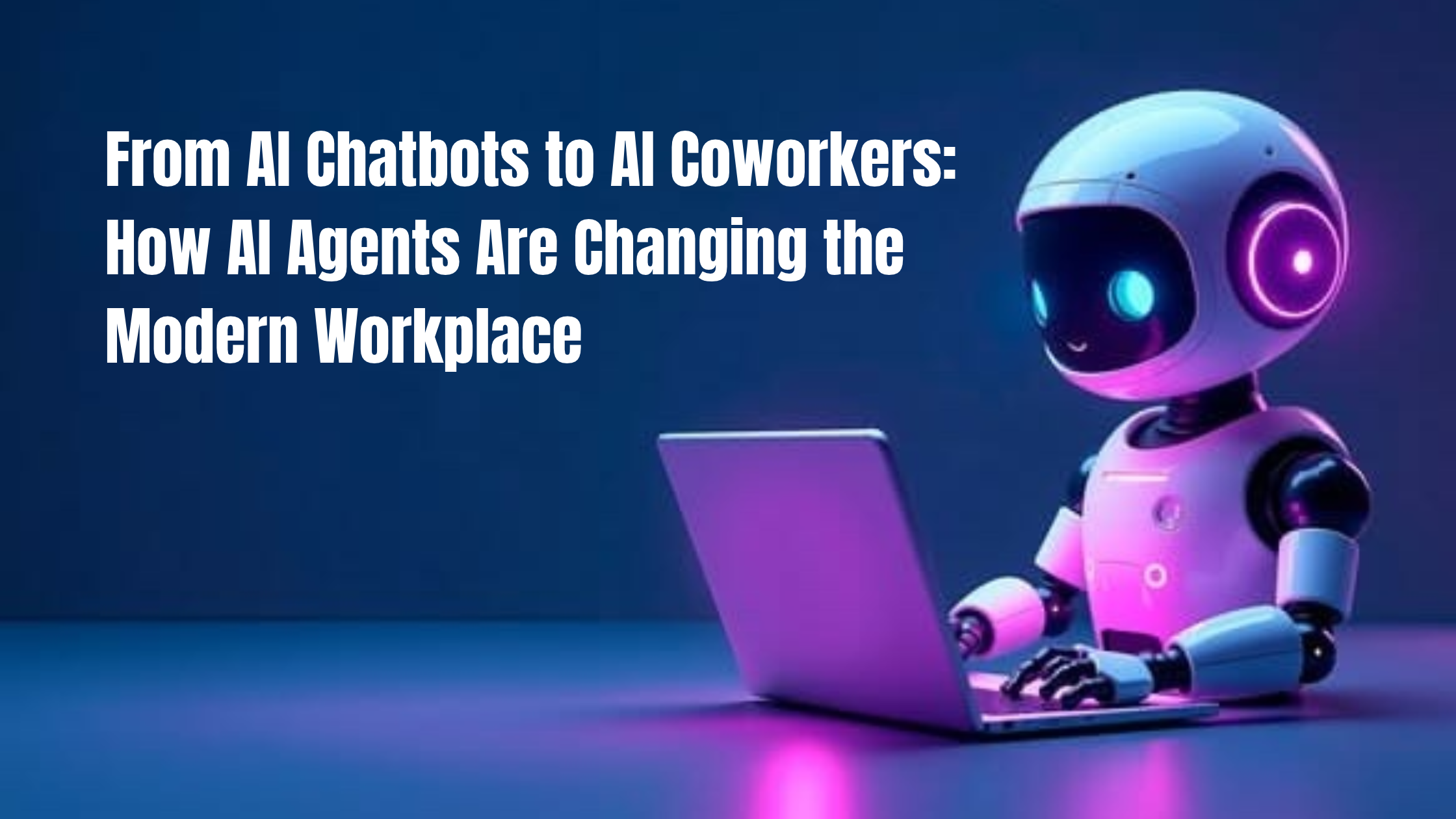
From AI Chatbots to AI Coworkers: How AI Agents Are Changing the Modern Workplace
Artificial Intelligence has evolved rapidly over the last few years. Businesses initially adopted AI for simple tasks such as generating content, answering customer questions, summarizing documents, and assisting employees with everyday activities.
Now, AI is entering another stage.
Instead of simply answering questions, modern AI agents can interact with software, access approved business information, execute multi-step workflows, and assist employees in completing real work.
This is creating the concept of an AI coworker an intelligent digital assistant that works alongside employees rather than functioning as a standalone chatbot.
For businesses, this could significantly change how sales, customer support, HR, finance, IT, marketing, and operations teams work in the coming years.
Consider a salesperson who begins the day with dozens of new leads.
Traditionally, they may need to review every enquiry, check previous conversations, update CRM records, prioritize leads, prepare emails, schedule follow-ups, and create reports.
An AI-powered coworker could assist with several parts of this workflow.
It could analyze incoming enquiries, summarize previous customer interactions, identify promising opportunities, prepare personalized follow-up messages, update relevant CRM information, and notify the salesperson when human attention is required.
The employee remains responsible for important decisions, while AI handles repetitive and information-heavy activities.
At Tech Sonet, we see this human-and-AI collaboration as one of the most practical opportunities for businesses adopting Artificial Intelligence.
" The future of work isn't humans competing with AI, it's humans using AI to accomplish more. "
The biggest difference between a traditional chatbot and an AI coworker is the ability to take context-aware actions.
A chatbot generally receives a question and produces a response.
An AI agent can potentially understand a goal, determine the steps required, retrieve relevant information, use connected tools, and execute approved actions.
For example, a customer-support agent could retrieve order information, review previous conversations, search a knowledge base, prepare an appropriate response, update the support ticket, and escalate unusual cases to an employee.
This turns AI from a communication interface into an active part of a business workflow.
Where AI Coworkers Can Support Businesses
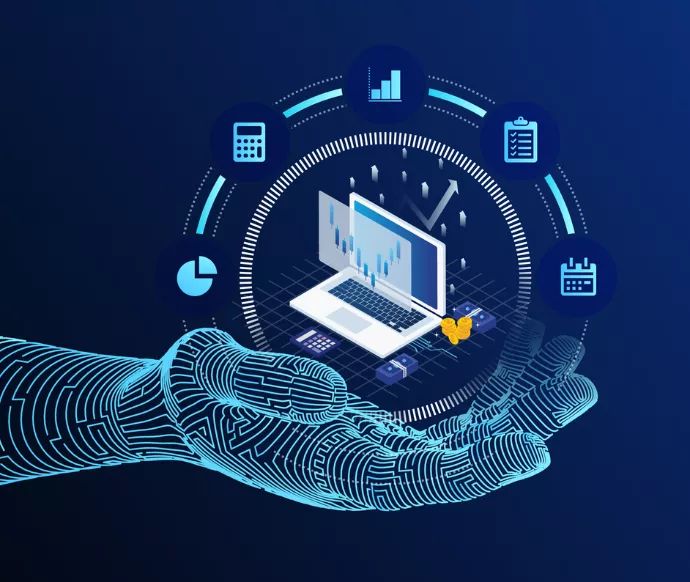
- Sales Teams – Research leads, summarize conversations, prepare follow-ups, and assist with CRM updates
- Customer Support – Answer common questions, retrieve information, and escalate complex issues
- Human Resources – Assist with onboarding, employee queries, documents, and internal information
- Software Development – Assist with coding, debugging, testing, documentation, and code analysis
However, successful AI adoption does not mean giving AI unlimited access to every business system.
Organizations need clearly defined permissions.
An AI agent may be allowed to prepare an email but require employee approval before sending it. It may generate a quotation but require authorization before sharing it with a customer.
Similarly, sensitive financial, employee, and customer information should only be accessible according to appropriate roles and security policies.
This approach is often known as Human-in-the-Loop AI.
Another important factor is integration.
AI becomes significantly more useful when it can securely interact with the systems employees already use.
This might include CRM platforms, databases, email systems, communication tools, ERP software, project-management platforms, cloud applications, and internal APIs.
Instead of forcing employees to move information manually between multiple applications, intelligent workflows can connect these systems.
Imagine asking an internal AI assistant:
“Show me all high-priority leads that haven’t received a follow-up this week and prepare personalized follow-up messages.”
The AI could retrieve information from approved systems, analyze it, and prepare the required output while keeping the employee in control of the final action.
This is where AI begins moving beyond productivity assistance toward intelligent business automation.
At Tech Sonet, we build custom software, AI-powered applications, CRM platforms, APIs, enterprise systems, intelligent automation solutions, and scalable web and mobile applications.
Our focus is on integrating AI where it creates genuine business value—not simply adding AI because it is trending.
The most effective AI solutions begin with a simple question:
Which repetitive activities consume valuable employee time today?
Once those processes are identified, businesses can determine where AI should assist, where automation should take over, and where human judgment must remain essential.
AI coworkers are unlikely to replace the importance of human experience, creativity, relationships, and decision-making.
Instead, they can remove repetitive digital work and allow employees to spend more time on the activities where people provide the greatest value.
The future workplace may therefore not consist of humans or AI.
It will increasingly be built around humans working with AI.
And businesses that learn how to combine both effectively could create faster, smarter, and more productive organizations.