Why Businesses Need to Monitor What Their AI Is Actually Doing
Artificial Intelligence is rapidly moving from experimentation into everyday business operations. Companies are deploying AI assistants, RAG systems, intelligent automation, AI agents, recommendation engines, and AI-powered customer support across their digital platforms.
But as AI systems become responsible for more business processes, a new challenge is emerging:
How do businesses know whether their AI is actually working correctly?
Traditional software monitoring focuses on metrics such as application uptime, server performance, errors, and response times. AI applications introduce additional questions around answer quality, model behavior, retrieval accuracy, token usage, cost, latency, and unexpected outputs.
This has made AI Observability an increasingly important part of building reliable AI-powered software.
AI observability provides businesses and development teams with visibility into how an AI system behaves after it has been deployed.
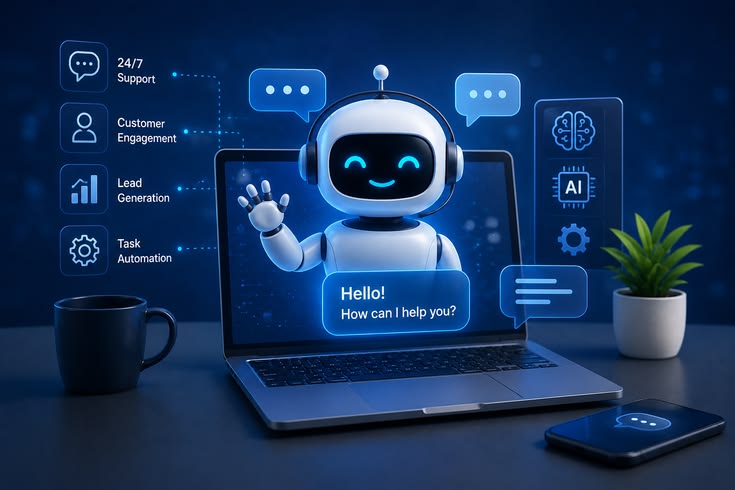
Consider an AI-powered customer support system.
From a traditional software perspective, everything might appear healthy. The server is running, APIs are responding, and users are receiving answers.
But what if those answers are inaccurate?
What if the RAG system retrieves the wrong documents?
What if response times suddenly increase?
Or what if a simple customer interaction starts consuming significantly more AI resources than expected?
Without proper monitoring, these problems may remain invisible until customers begin reporting them.
AI observability helps teams examine what happened throughout an AI interaction—from the initial user request and retrieved information to model responses, tool calls, performance, and application-level outcomes.
At Tech Sonet, we believe production AI systems should be designed not only to generate intelligent outputs but also to provide businesses with enough visibility to understand and improve those outputs.
"Building an AI system is only the beginning. Reliable AI requires understanding how that system behaves in the real world."
One important aspect of AI observability is tracing.
Modern AI applications frequently involve multiple components.
For example, a user asks a question, the application searches a knowledge base, retrieves several documents, sends relevant information to an AI model, receives an answer, calls another business system, and finally returns a response.
If something goes wrong, developers need to understand which part of that workflow caused the problem.
Tracing allows teams to follow these steps and identify potential bottlenecks or failures.
- Response Quality – Determine whether AI-generated answers remain relevant and useful
- Retrieval Accuracy – Monitor whether RAG systems are retrieving appropriate information
- AI Usage & Cost – Understand model usage and infrastructure consumption
- Errors & Failures – Identify unsuccessful model calls and workflow interruptions
Observability becomes even more important with Agentic AI.
Traditional chatbots mainly generate responses. AI agents may perform actions.
An agent might update a CRM record, send information to another system, generate a report, create a task, or trigger an automated workflow.
Businesses therefore need visibility into what action was performed, why it happened, which information was used, and whether the action completed successfully.
This creates an audit trail that can help organizations maintain greater control over increasingly autonomous AI systems.
Another major reason for AI observability is cost optimization.
AI applications may interact with multiple models and services. Without monitoring, organizations may not understand which features, workflows, or user requests consume the most resources.
Observability data can help development teams identify expensive operations and optimize how AI models are used.
For example, simpler tasks could potentially be routed to smaller models while advanced reasoning requests use more capable models.
This creates a more efficient multi-model AI architecture.
AI observability also supports continuous improvement.
At Tech Sonet, we develop AI-powered applications, intelligent automation platforms, RAG systems, custom software, APIs, enterprise solutions, and scalable digital products designed around practical business requirements.
As organizations move from AI experiments to production-grade AI systems, monitoring will become just as important as model selection.
Businesses will increasingly need to understand not only:
“Is our AI application running?”
but also:
“Is our AI application producing the right results, at the right speed, at the right cost?”
That is where AI observability becomes essential.
The next generation of successful AI products will not simply be intelligent. They will be observable, measurable, secure, controllable, and continuously improving.