
The Rise of No-Code & Low-Code Platforms: Are They Replacing Traditional Development?
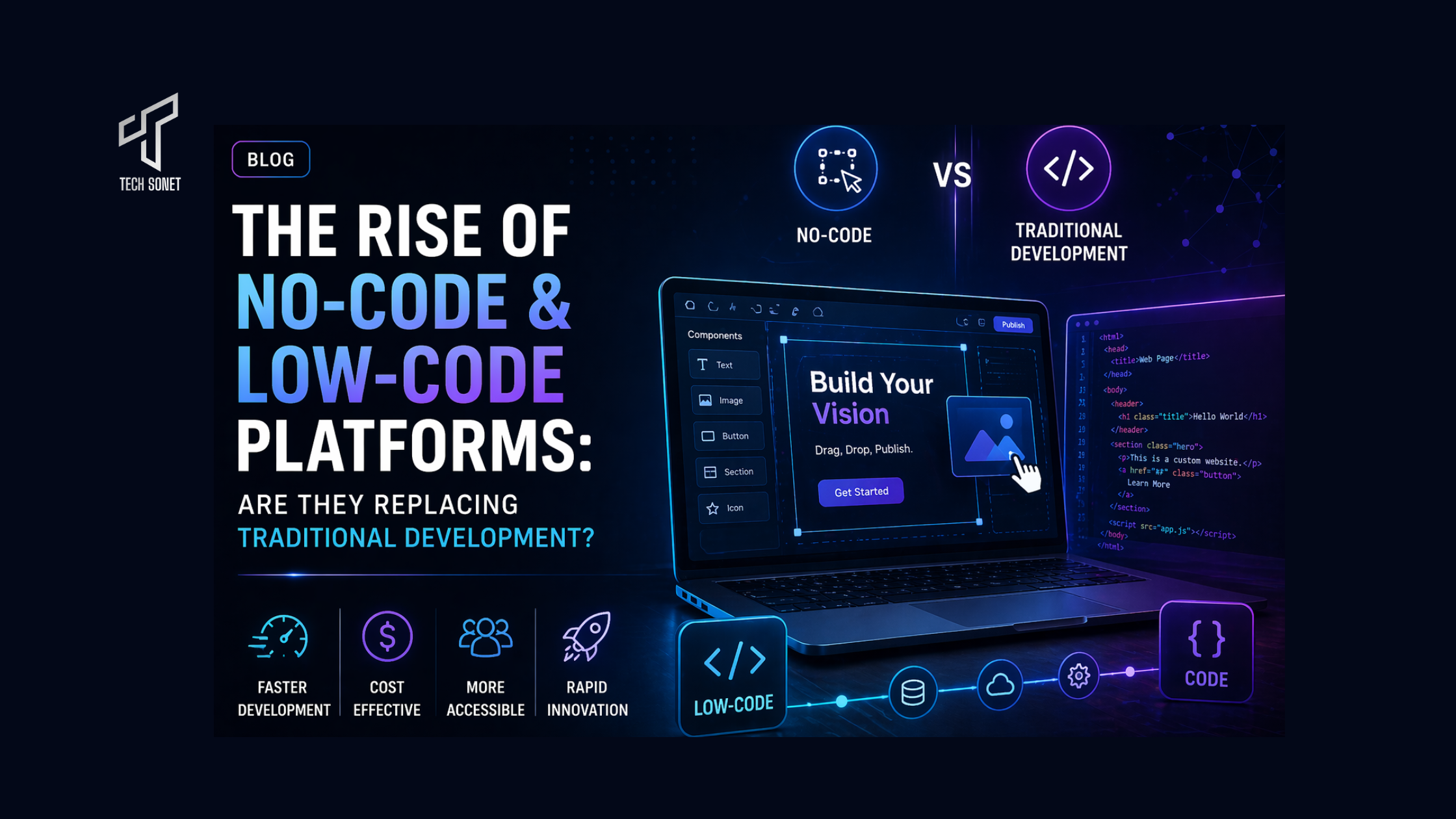
In 2026, one of the most talked-about trends in the tech industry is the rapid rise of no-code and low-code platforms. What once seemed like a niche concept has now become a powerful movement, enabling businesses to build applications, websites, and automation workflows without deep programming knowledge.
But this raises an important question:
Are no-code and low-code platforms replacing traditional developers—or simply changing the way development works?
Innovation doesn’t come from replacing people—it comes from empowering them with better tools."
What Are No-Code & Low-Code Platforms?
No-code and low-code platforms are tools that allow users to create digital products using visual interfaces instead of writing complex code.
- No-Code: Designed for non-technical users (drag-and-drop builders)
- Low-Code: Requires minimal coding, ideal for developers looking to speed up projects
Popular examples include website builders, automation tools, and app development platforms that simplify the entire development process.
Why Are They Growing So Fast?
The demand for faster digital solutions has pushed businesses to look beyond traditional development methods. Here’s why these platforms are booming:
Speed & Efficiency
Projects that used to take months can now be completed in days or even hours.
Cost-Effective
Businesses save significantly on development costs by reducing dependency on large tech teams.
Accessibility
Non-developers like marketers and founders can now build and test ideas independently.
Rapid Prototyping
Startups can quickly launch MVPs (Minimum Viable Products) and validate ideas in real time.

Are Developers Becoming Obsolete?
Short answer: No.
While no-code tools are powerful, they come with limitations:
- Limited customization for complex applications
- Scalability challenges
- Dependency on platform capabilities
- Security and performance constraints
No-code and low-code platforms are not replacing developers—they are empowering innovation. They are making technology more accessible, speeding up development cycles, and enabling businesses to experiment like never before.
The real winners in this new era will be those who embrace both simplicity and sophistication—using the right tools at the right time.