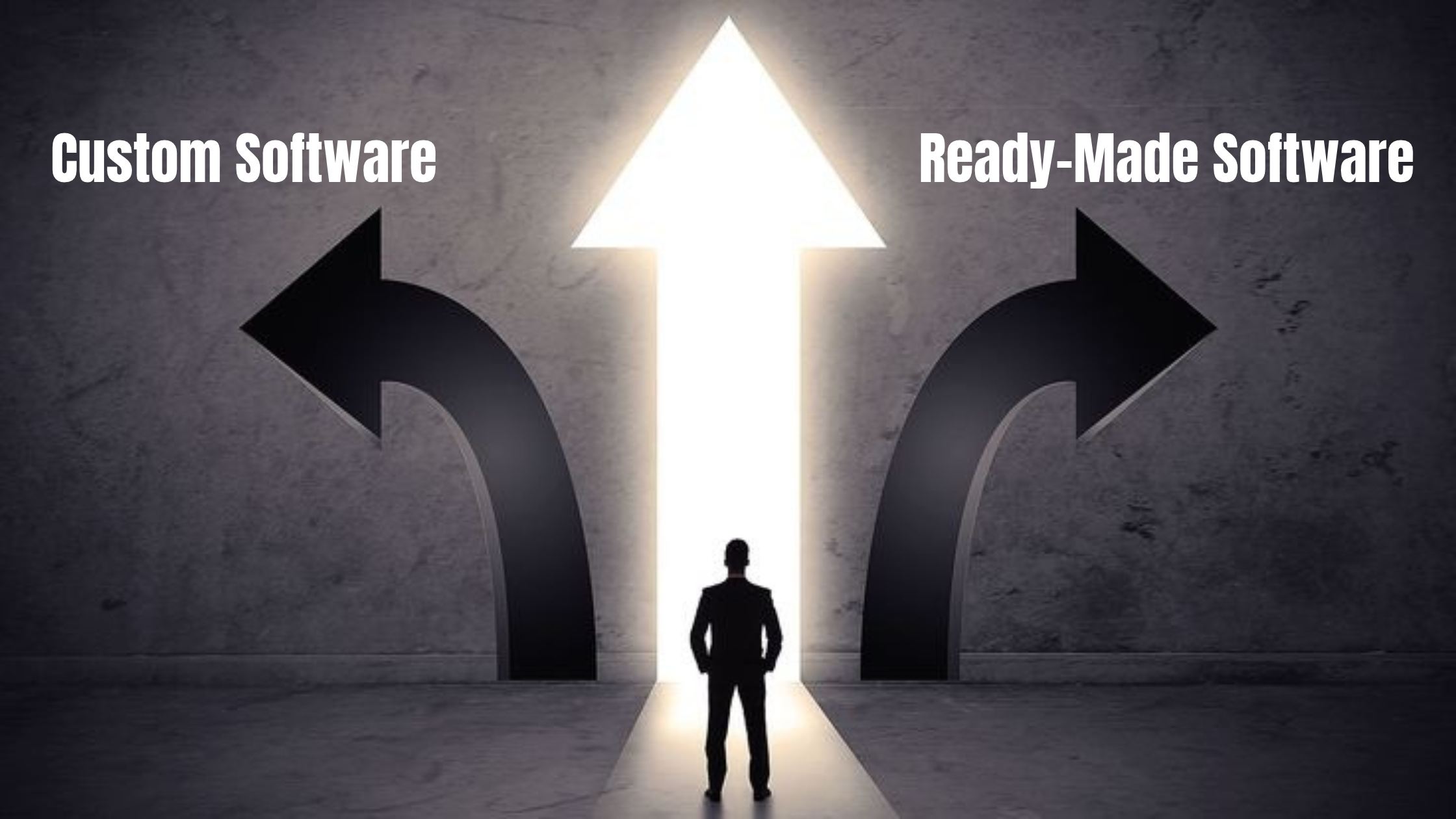
Custom Software vs Ready-Made Software: What Should Businesses Choose in 2026?
Technology has become the backbone of modern businesses. From managing customers and employees to tracking sales, inventory, payments, projects, and daily operations, almost every organization now depends on software.
But when a business decides to adopt a new digital solution, one important question often appears:
Should we purchase ready-made software or build custom software specifically for our business?
Both approaches have advantages, but the right decision depends on business processes, budget, scalability requirements, integrations, and long-term goals.
In 2026, this decision has become even more important as technologies such as Artificial Intelligence, automation, cloud computing, APIs, and intelligent analytics allow businesses to build highly customized digital ecosystems.
Ready-made software is designed to solve common problems for a large number of businesses.
CRM platforms, accounting software, project management applications, HR systems, and eCommerce platforms are common examples.
These solutions can be an excellent choice when business requirements are standard and companies want to start quickly.
However, every organization operates differently.
As businesses grow, they may discover that existing software does not completely match their workflow. Employees may need to use multiple applications, manually transfer information, maintain spreadsheets, or create workarounds to complete everyday tasks.
This is where custom software development becomes valuable.
At Tech Sonet, we build software around actual business processes so technology adapts to the organization rather than forcing the organization to adapt to rigid software.
The best software doesn't simply provide more features, it solves the right business problems.
Custom software is designed specifically around an organization’s requirements.
For example, imagine a company that manages leads through WhatsApp, tracks customers in spreadsheets, generates quotations manually, maintains payments in another system, and creates reports separately.
Instead of operating five disconnected processes, a custom platform could bring these activities together.
A centralized system could capture leads, maintain customer information, generate quotations, track payments, automate follow-ups, manage employees, and provide management dashboards.
Artificial Intelligence can make such platforms even more powerful by introducing intelligent automation and decision support.

- Custom CRM Systems
- ERP & Business Management Platforms
- AI-Powered Applications
- Web & Mobile Applications
One of the biggest advantages of custom software is scalability.
A business may initially require only customer management and sales tracking. Later, it may need inventory management, employee access, automated communication, payment tracking, reporting, or AI-powered features.
With a properly designed architecture, these capabilities can be introduced as the organization grows.
However, custom development is not automatically the right solution for every business.
If a company’s requirements are simple and already covered effectively by an existing platform, purchasing ready-made software may be faster and more economical.
Custom development becomes especially valuable when a business has unique workflows, multiple disconnected systems, complex automation requirements, specialized customer experiences, or plans to build its own digital product.
The important step is understanding the problem before choosing the technology.
Businesses should ask:
What processes consume the most time?
Where does repetitive manual work happen?
Which systems are disconnected?
What information does management need but cannot easily access?
Which processes could be improved using AI or automation?
The answers to these questions can reveal where technology can create the greatest impact.
At Tech Sonet, we help businesses transform ideas and operational challenges into practical digital solutions.
Our expertise includes custom software development, web and mobile applications, AI-powered solutions, CRM systems, APIs, cloud-based applications, business automation, and enterprise platforms.
Rather than simply developing features, our focus is on understanding the business process behind the software and creating solutions that are scalable, secure, user-friendly, and aligned with long-term objectives.
As businesses become increasingly digital, software will no longer function only as a supporting tool.
For many organizations, software itself will become a competitive advantage.
The right technology can help teams work faster, reduce repetitive tasks, improve customer experiences, connect business operations, and provide better visibility for decision-making.
Whether that means adopting an existing platform or developing a completely customized solution, the objective should remain the same:
Use technology to simplify business, not complicate it.