
API-First Development in 2026: Why Connected Software Is the Future of Digital Business
In today’s digital world, businesses rarely depend on just one software application. A typical organization uses multiple platforms for customer management, payments, communication, inventory, analytics, employee management, and daily operations.
But having multiple applications creates a major challenge: How can these systems communicate and work together efficiently?
This is where API-First Development is transforming modern software engineering.
An Application Programming Interface (API) allows different software systems to exchange information and interact with one another. API-first development takes this concept further by designing APIs as a foundational part of an application rather than adding them after development.
In 2026, as businesses increasingly adopt cloud computing, AI-powered applications, SaaS platforms, and intelligent automation, API-first architecture is becoming an important strategy for building connected and scalable digital ecosystems.
Imagine an eCommerce business that uses separate systems for its website, inventory management, payment processing, customer support, and order tracking.
Without proper integrations, employees may need to update information manually across multiple platforms.
An API-first approach can connect these systems through well-defined interfaces.
When a customer places an order, the application can automatically update inventory, initiate payment processing, create an order record, notify the logistics platform, and send a confirmation message.
Instead of operating as disconnected tools, different applications become part of one coordinated digital workflow.
At Tech Sonet, we understand the importance of building software that can communicate efficiently with other applications while maintaining security, performance, and scalability.
The future of software isn't about building isolated applications—it's about creating connected systems that work intelligently together.
One of the biggest advantages of API-first development is flexibility.
Traditional software architectures sometimes make integrations difficult because applications are developed primarily around internal functionality.
With API-first design, development teams define how systems will communicate early in the development process.
This makes it easier to connect frontend applications, backend services, mobile platforms, third-party software, and cloud infrastructure.
APIs are also becoming increasingly important in Artificial Intelligence.
Modern AI agents and intelligent automation platforms often depend on APIs to retrieve business information, interact with external services, and execute approved actions.
For example, an AI-powered CRM assistant could use APIs to retrieve customer information, analyze lead activity, prepare follow-up recommendations, and update records according to business rules.
Key Benefits of API-First Development for Businesses
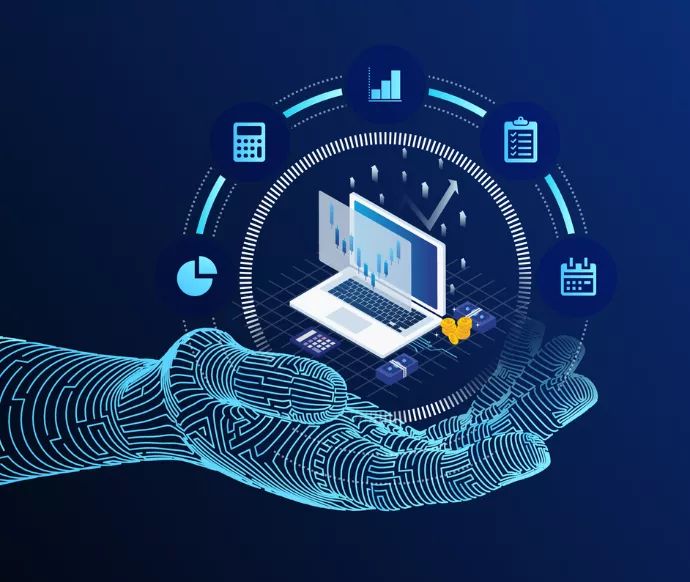
- Seamless Integration
- Faster Development
- Scalable Architecture
- Workflow Automation
Another important advantage is reusability.
A well-designed API can support multiple applications without requiring developers to rebuild the same functionality repeatedly.
For example, a business can use a common customer management API across its website, mobile application, internal dashboard, and customer support platform.
This creates a more consistent software ecosystem and reduces unnecessary duplication.
However, API-first development requires careful technical planning.
APIs must be designed with proper authentication, authorization, data validation, error handling, documentation, versioning, and performance monitoring.
Security is particularly important because APIs often provide access to sensitive business information.
Development teams should ensure that users and connected applications can access only the information and functionality they are authorized to use.
Organizations should also consider API reliability, rate limiting, monitoring, and backward compatibility when designing systems for long-term growth.
At Tech Sonet, we develop custom software, web and mobile applications, enterprise platforms, CRM systems, cloud-based solutions, AI-powered applications, and API integrations designed around real business requirements.
Our focus is on creating software that does more than solve an immediate problem. We aim to build scalable digital foundations that can support future integrations, automation, and business expansion.
As Artificial Intelligence, cloud-native development, microservices, and connected enterprise platforms continue to evolve, APIs will remain a critical part of modern technology infrastructure.
Businesses will increasingly need software that can communicate, integrate, automate, and scale rather than operate independently.
The future of digital transformation will not be defined only by how many applications a business uses.
It will be defined by how intelligently those applications work together.