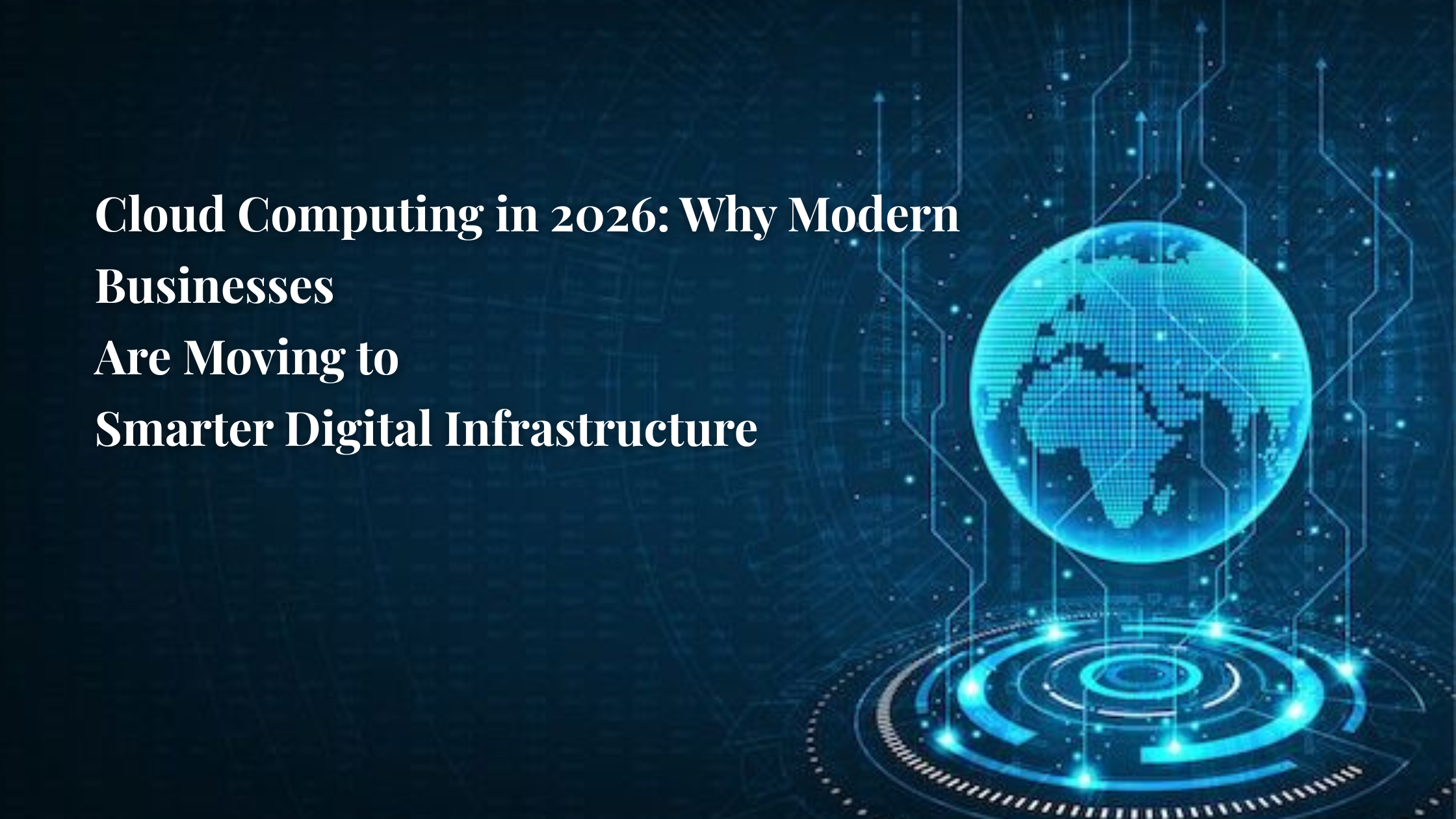
Cloud Computing in 2026: Why Modern Businesses Are Moving to Smarter Digital Infrastructure
The way businesses build, manage, and scale technology has changed dramatically. In 2026, organizations are increasingly moving away from traditional infrastructure and adopting cloud-based solutions that provide greater flexibility, scalability, security, and operational efficiency.
Cloud computing allows businesses to access applications, databases, storage, computing resources, and other digital services without maintaining extensive physical infrastructure. For startups and established enterprises alike, this means technology can scale alongside business requirements.
More importantly, cloud technology has become the foundation for many modern innovations, including Artificial Intelligence, automation, real-time analytics, SaaS platforms, and intelligent business applications.
Businesses today need technology that can respond quickly to changing customer expectations and market conditions. Traditional infrastructure can make expansion expensive and time-consuming, while cloud-based systems allow organizations to increase or decrease resources according to demand.
For example, an eCommerce platform experiencing increased traffic during a major campaign can scale its infrastructure to handle additional visitors. Similarly, a growing SaaS business can support more users without rebuilding its entire technology environment.
Cloud infrastructure also enables development teams to deploy applications faster, manage resources efficiently, and continuously improve digital products.
At Tech Sonet, we help businesses build modern, scalable, and cloud-ready software solutions designed around their operational requirements and long-term growth objectives.
Modern businesses don't just need technology that works today—they need technology that can scale with tomorrow's opportunities.
One of the biggest advantages of cloud computing is flexibility. Businesses can access critical applications and information from different locations while providing employees and customers with reliable digital experiences.
Cloud platforms also make it easier to integrate technologies such as AI, APIs, databases, analytics platforms, and automation tools into a connected business ecosystem.
Instead of operating multiple disconnected systems, organizations can create centralized digital environments where information flows efficiently between different applications.

- Scalable Infrastructure – Increase computing resources as your business grows
- Reduced Infrastructure Costs – Minimize dependency on expensive physical servers
- Improved Accessibility – Access business applications securely from different locations
- Enhanced Performance – Deliver reliable digital experiences to customers
Cloud computing can also significantly improve the software development lifecycle. Development teams can create testing environments quickly, automate deployments, monitor application performance, and release updates without lengthy infrastructure preparation.
This allows businesses to innovate faster while maintaining reliable and scalable applications.
However, moving to the cloud requires proper planning. Businesses must consider application architecture, data security, access control, database management, backup strategies, performance monitoring, and cost optimization.
Simply migrating existing applications without evaluating these factors can create unnecessary complexity. A successful cloud strategy should therefore align technology decisions with actual business requirements.
At Tech Sonet, we develop custom web applications, enterprise software, cloud-ready platforms, APIs, AI-powered solutions, and automation systems that help organizations modernize their technology infrastructure.
Our focus is on creating solutions that are not only technically powerful but also practical, secure, scalable, and aligned with business objectives.
As digital transformation continues to accelerate in 2026, cloud computing will remain an essential foundation for businesses adopting AI, automation, and modern software technologies.
Organizations that invest in scalable digital infrastructure today will be better prepared to innovate, adapt, and compete tomorrow.